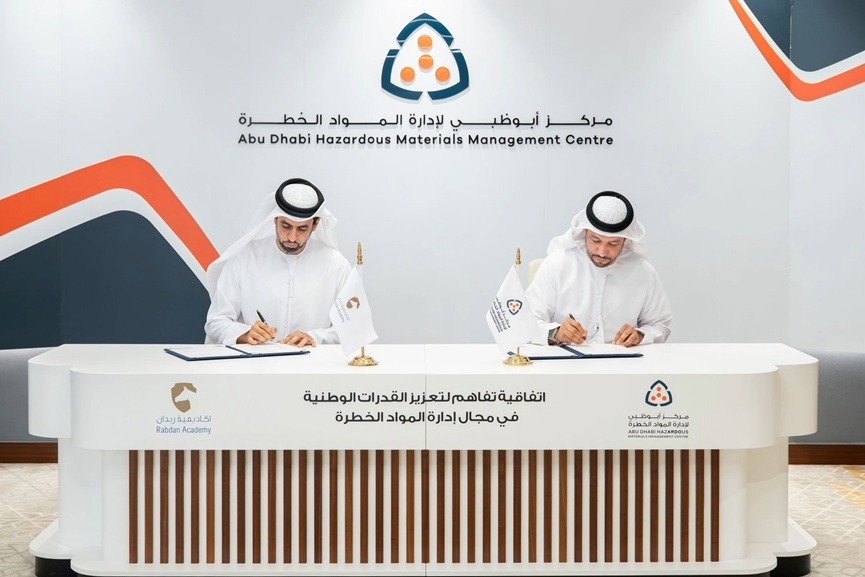
The Abu Dhabi Hazardous Materials Management Center (ADHMMC) has signed a Memorandum of Understanding (MoU) with Rabdan Academy to strengthen national capabilities in hazardous materials management and enhance institutional readiness across the emirate.
Under the agreement, both parties will collaborate to design and implement specialized educational and training programs aligned with international best practices and global standards.
The agreement establishes an integrated and sustainable national ecosystem for the safe regulation, handling, and oversight of hazardous materials.
The cooperation will also extend to conducting innovative scientific and applied research addressing emerging challenges in hazardous materials management.
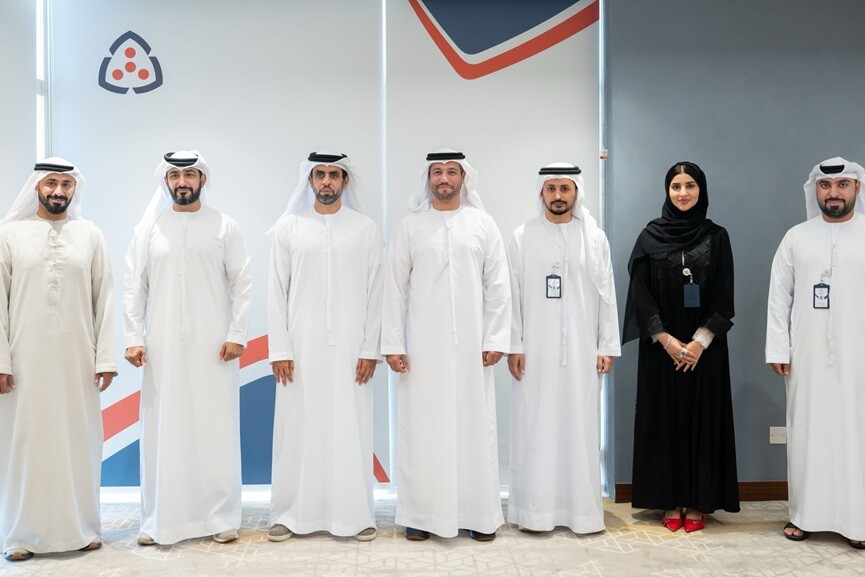
The MoU was signed at the Center’s headquarters by HE Khalfan Abdullah Al Mansoori, Acting Director General of the Abu Dhabi Hazardous Materials Management Center, and HE Salem Saeed Al Saeedi, Vice President of Rabdan Academy, in the presence of senior officials from both entities.
The partnership comes at a time as Abu Dhabi continues to witness rapid economic and industrial expansion. This growth necessitates advanced regulatory frameworks and operational systems to ensure the safe and efficient management of hazardous materials across their full lifecycle—from transportation and storage to usage and disposal.
Al Mansoori stated that, “Our partnership with Rabdan Academy represents a pivotal step toward achieving our vision of building a unified and resilient national system for hazardous materials management. Investing in human capital is the cornerstone of ensuring sustainable security and safety. Through this collaboration, we will leverage Rabdan Academy’s academic expertise and advanced training methodologies to develop specialized training programs and conduct joint research that enhances the efficiency of professionals in this vital sector.”
Image Courtesy: ADHMMC | Cropped by GBN
Al Saeedi highlighted that hazardous materials management represents a core pillar of national preparedness due to its regulatory, operational, and security dimensions.
He noted that the partnership reflects a model of integration between regulatory authorities and academic institutions, enabling knowledge to be translated into practical, sustainable capabilities that safeguard lives, protect property, and ensure business continuity.
The MoU outlines several key areas of cooperation, including technical knowledge exchange, professional development programs for employees, joint research and development initiatives, and the organization of seminars, conferences, and workshops.
These initiatives aim to build expert networks, strengthen institutional capacity, and provide advisory and technical services to stakeholders.
Through this collaboration, Rabdan Academy will develop specialized academic and professional programs supported by applied research to prepare future leaders and experts capable of managing hazardous materials effectively under diverse operational scenarios.