Andrew Sobko, one of the most innovative minds in AI and logistics and the visionary behind Argentum AI, spoke to GCC Business News through our senior representative, MJ Matthew, in an exclusive interview about decentralized computing, the rise of “GPU entrepreneurs,” and his bold plan to build a one-million-GPU global network.
In this interview, Sobko outlines the vision behind Argentum AI, his shift from logistics marketplaces to AI infrastructure, and why he believes the Middle East is uniquely positioned to lead the next century of technological innovation.
Background and Early Journey
MJ Matthew: Andrew, let’s start with your background. What shaped your path?
Andrew Sobko: My entrepreneurial journey began early. At 18, I built my first marketplace, a platform that digitized railroad infrastructure across the United States. We standardized pricing, created auction mechanisms for capacity, and enabled Fortune 500 companies to secure freight space in a way the industry had never seen before. The success of that venture gave me the confidence and capital to launch my second marketplace in 2018, this time focused on port infrastructure.
Ports are incredibly complex environments with fragmented rules and processes. My vision was to create what I called the “American Express card for ports,” a unified marketplace where more than 30,000 vendors operated on one side and major enterprise shippers on the other. That company went on to become one of the fastest-growing businesses in the U.S., ranking on the Financial Times list and backed by some of the world’s most respected investors, including Brookfield and Sequoia.
Through these experiences, I became convinced that asset-light marketplaces, such as Uber and Airbnb, could be applied to many more industries. I’ve always believed in leveraging existing infrastructure rather than trying to own it. That philosophy eventually led me to decentralized compute.
Andrew Sobko | Designed by Team GBN
Democratizing Compute and the 1% Problem
MJ Matthew: What inspired your mission to democratize compute?
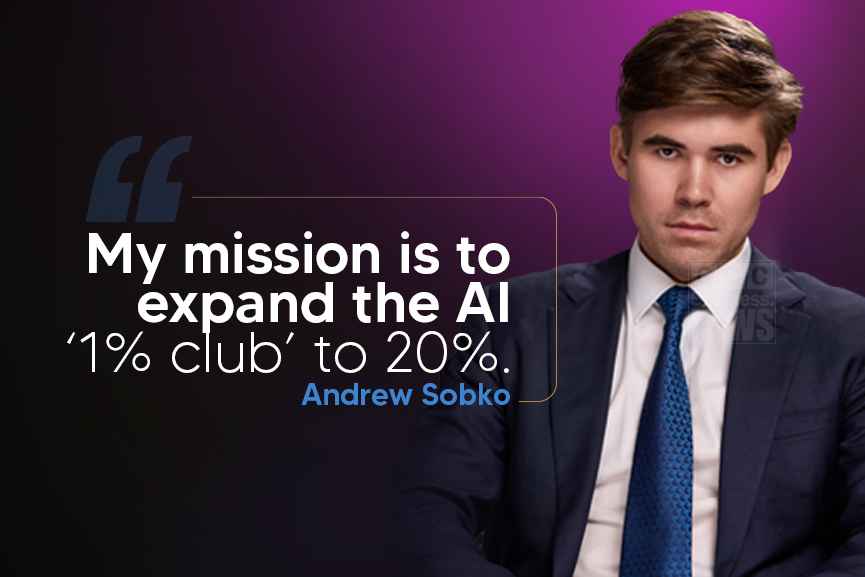
Andrew Sobko: Today, most of the world’s AI infrastructure is concentrated within a tiny “1% club” of countries and institutions, primarily in the United States and China. My mission is to expand that club to 20% by giving emerging markets access to real AI capabilities. That begins with compute.
During my time building marketplaces, I noticed another trend. Many of the most successful new data center operators in the U.S.-companies like CoreWeave and Crusoe—started as Bitcoin miners. These people already had infrastructure, power access, and real technical grit. I realized we could help transform this global community of miners into something far more valuable: GPU entrepreneurs.
By linking them to Fortune 100 demand through Argentum AI, they can pivot from speculative crypto mining to real enterprise-grade AI compute. This shift unlocks new revenue streams for them while expanding global compute capacity.
Second-Life GPUs and the Circular Compute Economy
MJ Matthew: You also mentioned second life GPUs. Why are they important?
Andrew Sobko: AI giants like OpenAI, Anthropic, and xAI constantly refresh their hardware to the latest models, such as the Blackwell 300 series. But their older GPUs remain incredibly powerful-more like a four-year-old Lamborghini than an obsolete machine.
Designed by Team GBN
These GPUs are often idle in U.S. data centers, even though they can still deliver outstanding performance for emerging markets. So, Argentum AI is building a circular compute economy by redistributing these second-life GPUs globally. This ensures that countries not in the AI “1% club” can still run advanced models, research, and innovation.
Our goal is ambitious: to build a marketplace of one million GPUs within two years, without owning a single one. Entrepreneurs earn income by hosting GPUs; emerging markets gain AI access; global infrastructure becomes more resilient. Everyone wins.
Building the World’s Largest Distributed GPU Network
MJ Matthew: How do you plan to integrate one million GPUs?
Andrew Sobko: The model is similar to Airbnb. Just as homeowners turned unused rooms into revenue-generating assets, GPU entrepreneurs can build micro-data centers in their garages, homes, or small facilities. Some may operate 20 GPUs, others 100, and large operators may host thousands.
Argentum AI provides the secure infrastructure, verification, trust mechanisms, and demand. Entrepreneurs bring the hardware. Together, this forms the world’s largest distributed data center-without us owning a single GPU.
GPU Entrepreneurs: A New Term and a New Economy
MJ Matthew: Is “GPU entrepreneurs” your term?
Andrew Sobko: Yes. The idea mirrors what the Bitcoin community did a decade ago, creating opportunities for thousands of miners worldwide. But GPUs are far more valuable. They power AI, robotics, simulation, and scientific research.
We’ve also designed Argentum AI to combine the strengths of centralized cloud with the resilience of decentralization. During a major AWS outage in the U.S., around 40% of the internet went down. With a decentralized model, workloads are automatically distributed across multiple partners, so the system keeps running even if one node fails.
I always say: “AWS was built for the web. Argentum AI is built for the age of AI.”
Designed by Team GBN
Heat, Housing, and Community Infrastructure
MJ Matthew: How does decentralized compute support sustainability?
Andrew Sobko: GPUs generate significant heat, and cooling them is expensive. But in colder regions, that heat is a natural asset. We’re exploring models where small GPU clusters placed near communities can feed heat directly into homes, warming 50 houses at once, while the data center itself generates revenue.
This turns an energy problem into a community benefit and aligns with sustainable development goals.
DeFi, Incentives, and Cross-Border Transactions
MJ Matthew: Where does DeFi fit into this ecosystem?
Andrew Sobko: Two areas. First, GPU entrepreneurs worldwide need faster payouts than the traditional 30-day invoicing cycle. We’re exploring ways to enable instant, secure settlements across borders.
Second, a decentralized incentive system could encourage GPU operators to reinvest in hardware, grow their operations, and upgrade their infrastructure. We haven’t made official announcements yet, but the direction is clear: real utility, not speculation.
From Logistics to AI Infrastructure
MJ Matthew: Will you discuss your logistics ventures here?
Andrew Sobko: Only briefly. My experience in logistics taught me how to aggregate thousands of small supply sources into one unified marketplace. The same pattern applies to GPU capacity. Instead of hundreds of small operators being invisible to major AI companies, Argentum AI consolidates them into one credible, enterprise-grade supply network.
This allows an OpenAI-scale client to plug in instantly and access thousands of GPUs without negotiating with individual operators.
Humans, AI, and the Future of Work
MJ Matthew: How do you see humans fitting into an AI-driven future?
Andrew Sobko: AI will massively increase global productivity, similar to the Industrial Revolution. I expect a future where humans may work three-day weeks while AI and robotics handle most repetitive tasks. Early waves of robotics may even scale in space for mining and exploration.
Designed by Team GBN
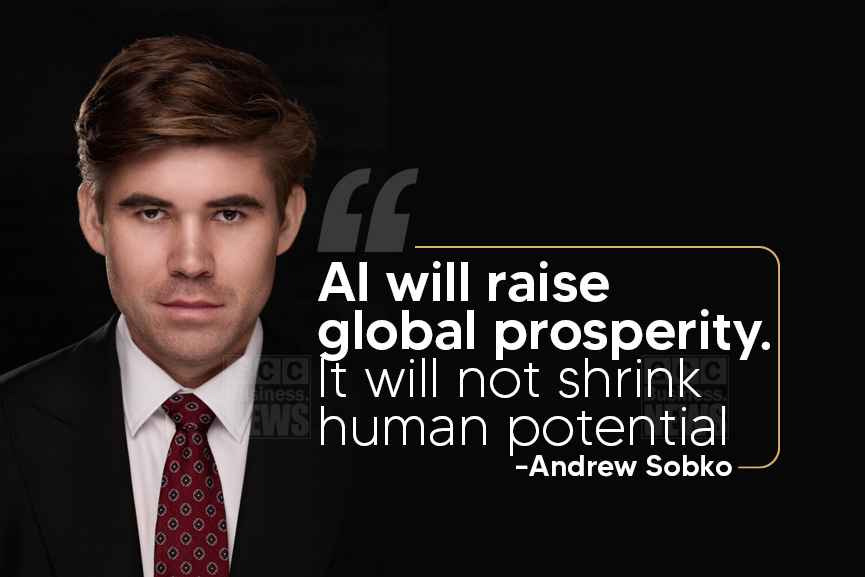
Countries that lead in AI adoption will see dramatic GDP acceleration. I believe AI will raise global prosperity, not reduce it.
Why the Middle East?
MJ Matthew: What brings you to the Middle East?
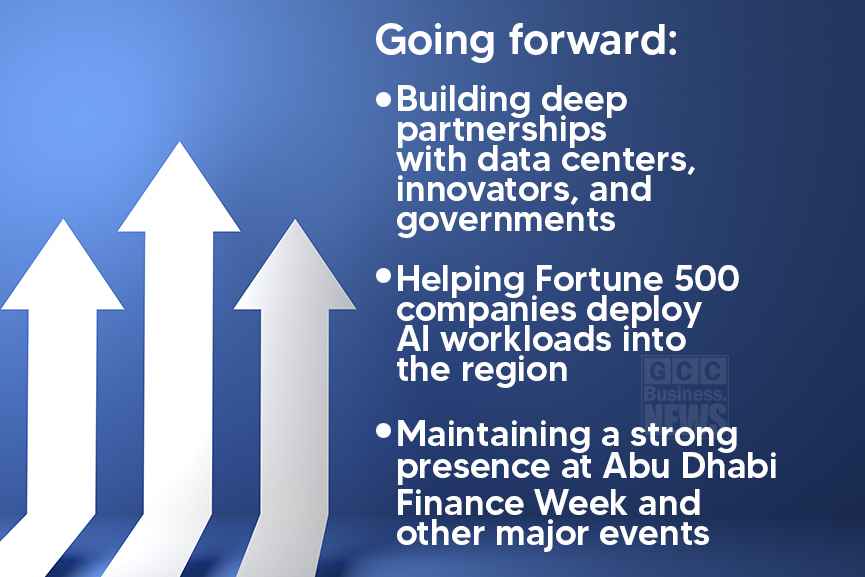
Andrew Sobko: The Middle East has a once-in-a-century opportunity to lead the AI infrastructure revolution. We recently hosted major investor gatherings in Dubai and Abu Dhabi. Our goal is to build deep partnerships with data center operators, innovators, and government stakeholders.
We aim to help Fortune 500 companies deploy AI workloads into the region, accelerating both infrastructure development and regional competitiveness. You’ll see us strongly represented at Abu Dhabi Finance Week and other major events.
The One Million GPU Vision: Revealed First
MJ Matthew: Are you sharing this one-million GPU plan publicly for the first time?
Andrew Sobko: Yes. You are the first to hear it publicly.
Final Thoughts
MJ Matthew: Any final message for Middle East readers?
Andrew Sobko: The Middle East has a significant opportunity to win the global AI race. My mission is to help create thousands of AI and GPU entrepreneurs here and ensure the region becomes a major force in the next 100 years of innovation.
Powerful ideas
MJ Matthew: GPU entrepreneurs, AI entrepreneurs… these are not just ideas but entire new economies in the making. Thank you, Andrew. Your clarity, conviction, and ambition are unmistakable. We appreciate the depth of your insights and the trust you have placed in GCC Business News.