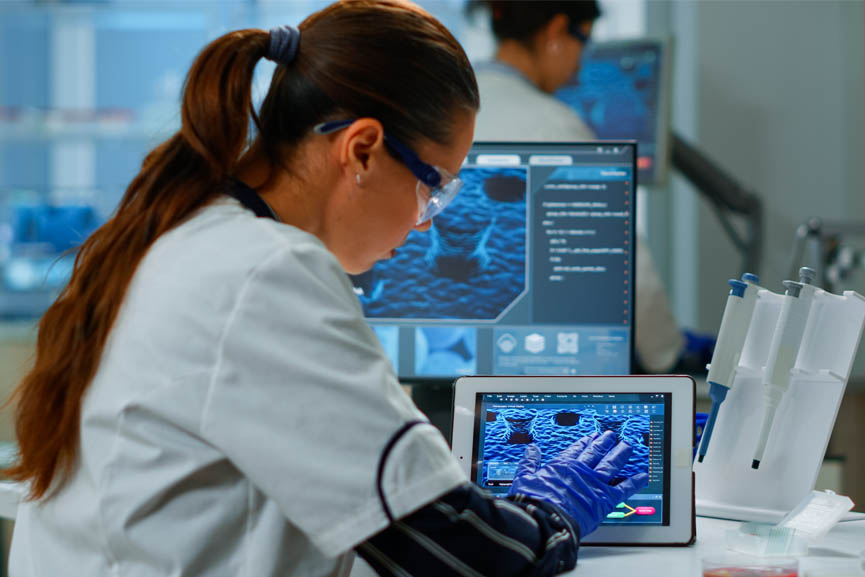
A Chinese research team has unveiled DeepRare, an AI-powered diagnostic system for rare diseases, achieving a groundbreaking level of accuracy.
The development, detailed in a study published in the Nature journal, marks a significant milestone in the field of medical diagnostics.
The diagnosis and treatment of rare diseases have historically been challenging, especially in areas with limited access to genetic testing. Additionally, traditional medical AI diagnostic systems often face trust issues due to their opaque reasoning processes, making it difficult for healthcare professionals to fully rely on them.
The evidence-based DeepRare was developed by a team from Xinhua Hospital, affiliated with the Shanghai Jiao Tong University (SJTU) School of Medicine and SJTU School of Artificial Intelligence.
Since its online diagnostic platform was launched last July, it has registered over 1,000 professional users across more than 600 medical and research institutions worldwide.
Test data revealed that when only clinical phenotypic information was provided, without genetic data, DeepRare achieved an impressive first-attempt accuracy of 57.18 percent in phenotypic diagnosis, nearly 24 percentage points higher than the previous global model. When genetic data was included, its diagnostic accuracy surpassed 70 percent.
According to the study, DeepRare integrates real-time access to a vast repository of medical literature knowledge and real-world clinical case data. In terms of diagnostic reasoning, it employs an iterative cycle of hypothesis, verification, and self-reflection to evaluate diagnostic clues and correct logical gaps.
In terms of reasoning, each diagnostic conclusion is accompanied by a complete chain of evidence, enabling doctors to not only view the diagnosis but also comprehend the underlying rationale behind it.
Sun Kun, one of the corresponding authors of the paper from Xinhua Hospital, said that the research team is preparing to initiate a global AI alliance for rare disease diagnosis and treatment.
They plan to complete real-world validation of 20,000 rare disease cases within the next six months, Kun added.