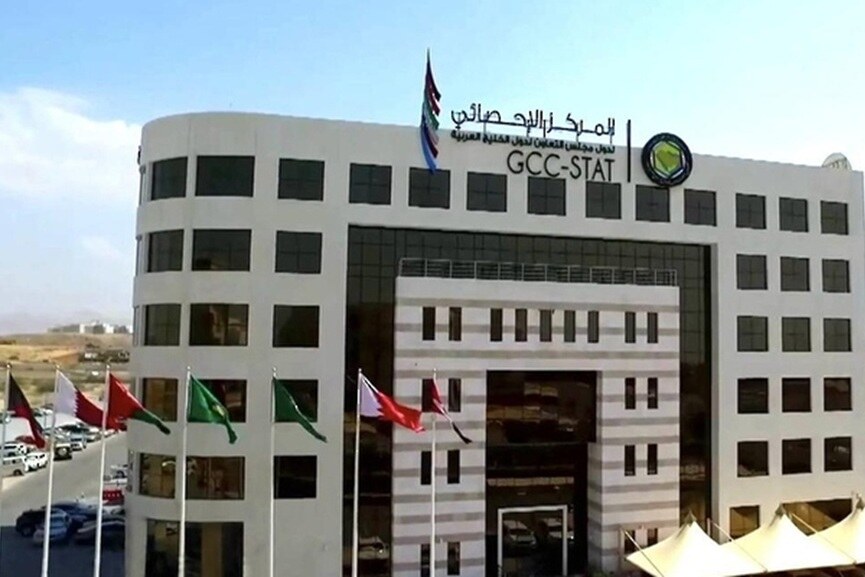
The Statistical Centre of the Cooperation Council for the Arab States of the Gulf (GCC-Stat) has released the tenth edition of the Gulf Statistical Atlas 2024, offering unified and comparative data to guide policymakers, researchers, and businesses across the region.
The publication aims to strengthen Gulf statistical integration and reinforce the role of official statistics as a key tool for planning, forecasting, and decision-making.
The atlas provides a comprehensive overview of the GCC countries, linking statistical indicators with geospatial maps to give a clear picture of demographic, economic, social, environmental, and infrastructure developments.
Total GCC population reached 61.5 million in 2024, with a density of 25.5 people per square kilometer.
Youth aged 15–34 represent a significant segment, reflecting the GCC’s youthful societies.
Key population indicators include fertility, mortality, and natural population growth rates, offering insight into demographic trends.
Economic Performance and Trade
GCC GDP at current prices stood at $2.3 trillion, with a general inflation rate of 1.7 percent, signaling relative price stability.
Merchandise trade totaled $1.6 trillion, with a surplus of $109.7 billion, highlighting the GCC’s continued importance in global trade.
Energy, Environment, and Sustainability
The atlas highlights the GCC’s global role in crude oil and natural gas production and reserves.
It tracks electricity generation and consumption, water usage, and wastewater reuse, reflecting regional efforts toward sustainable resource management.
Tourism, Transport, and Communications
Key indicators include inbound tourism, hotel establishments, and tourism revenues.
Transport and communications infrastructure data, such as mobile subscriptions, fixed telephone lines, and traffic statistics, show improvements in service efficiency and accessibility.
Jassim Mohammed Al-Budaiwi GCC Secretary General
“Accurate and reliable statistics are fundamental to sound planning and decision-making. Strengthening statistical integration across GCC countries supports sustainable development and enhances economic competitiveness.”
HE Intisar bint Abdullah Al-Wahibiyah, Director General of the Gulf Statistical Center, added that, “By combining statistical indicators with geographic information systems, the Gulf Statistical Atlas allows deeper insights and comprehensive analysis, serving governments, the private sector, researchers, media, and the public alike.”
Key Takeaways
GCC population growth is steady, with youth playing a major role in shaping society.
Economic indicators show stability, low inflation, and strong trade performance.
Energy and environmental data highlight sustainability and resource efficiency initiatives.
Tourism, transport, and communications sectors are expanding, reflecting improved infrastructure and services.
The Gulf Statistical Atlas 2024 provides a unified, accessible resource for decision-makers and stakeholders, helping guide development strategies and reinforce the competitiveness of GCC economies.