Statistics from the Statistical Centre for the Cooperation Council for the Arab Countries of the Gulf (GCC-Stat) have revealed sustained growth in education across the GCC, highlighting rising student numbers, expanding educational institutions, and an increased focus on human capital development.
The trends underscore the region’s commitment to improving education quality and supporting knowledge-based economic growth.
Student enrollment surges across all levels
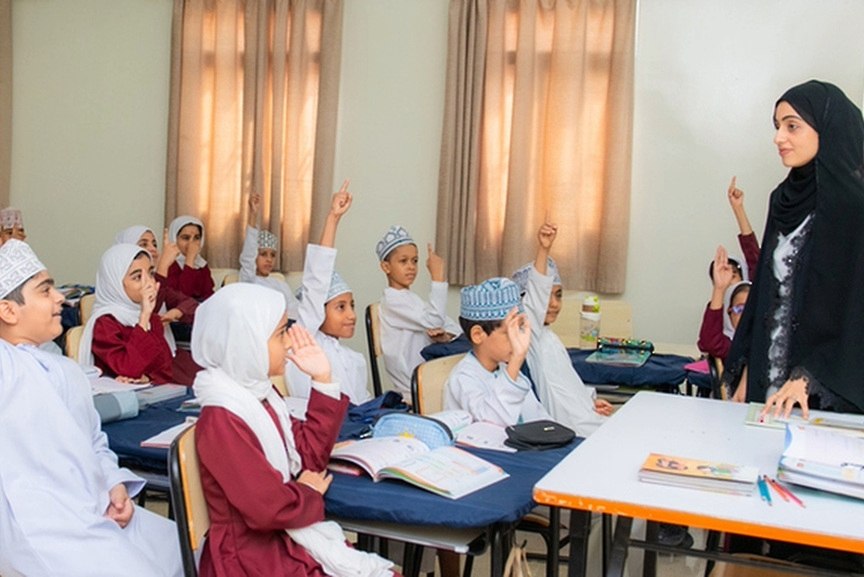
During the 2023/2024 academic year, the GCC recorded a total of approximately 9.7 million school students, alongside over 1.79 million higher education students. Early childhood programs accommodated nearly 993,000 children, while adult education programs enrolled more than 120,000 students, reflecting broad-based demand for education across all age groups.
The data also indicates gender parity in educational enrollment, with males representing 50.5 percent (4.9 million students) and females 49.5 percent (4.8 million students), demonstrating the GCC’s progress in providing equitable access to educational opportunities.
The GCC’s educational workforce totals 836,600 teachers in school education, with 626,800 in government schools (74.9 percent) and 209,900 in private schools (25.1 percent).
This highlights the critical role of government institutions in delivering high-quality education and nurturing qualified human resources.
Expansion of educational infrastructure
The region’s educational infrastructure continues to expand. There are approximately 32,743 schools, 10,802 kindergartens, 282 higher education institutions, and 1,013 adult education centers, reflecting ongoing investment in educational facilities and capacity-building.
Average student density is slightly higher in public schools, with 302 students per school, compared to 288 students in private institutions, reflecting increased demand for government education.
Collectively, these indicators signal continued development and modernization of the GCC educational systems. Investments in education are being positioned as a strategic pillar for the knowledge economy, supporting sustainable development goals and aligning with future labor market needs.