The GCC’s financial landscape is undergoing a rapid transformation, driven by the rise of mobile banking. No longer confined to brick-and-mortar branches, banking is now a digital-first experience, where user-friendly apps and highly personalised services define the customer journey.
With a growing fintech sector, high smartphone penetration, and a tech-savvy population, the GCC is rapidly expanding its mobile banking infrastructure. Regulatory support and economic diversification efforts are accelerating digital transformation, positioning the region as a key player in financial innovation.
Poised for expansion
Despite how much change the sector has already seen, there remains enormous scope for further tech-driven advancement and evolution within mobile banking, particularly within the GCC, according to Denys Boiko, a finance and banking investor and the founder of BDG Quantum Marketing Research.
“With smartphone penetration already high and still growing in the region, the appetite for seamless, empowering financial tools is only increasing,” Boiko explains. “By the early 2030s, mobile banking in the GCC is expected to be a $7 billion industry. This presents a vast opportunity for fintech innovators and investors.”
Apps that do everything
For banks and rival app makers, the emphasis is always on upgrading user experiences, improving interfaces, meeting emerging consumer demands and advancing overall seamlessness.
Neobanks such as Wio exemplify this trend with their ‘all-in-one’ approach, integrating everyday financial activities into a single digital platform. Similarly, Mashreq Neo delivers an intuitive banking experience, consolidating services like credit card applications, savings accounts, and international transfers into one streamlined interface.
Traditional banking powerhouses are also embracing this shift. Emirates NBD, for example, has expanded its digital offerings with the Liv app, designed specifically for younger, digitally savvy consumers. Meanwhile, Doha Bank recently introduced a new Corporate Mobile Banking App, offering enhanced financial management tools on the go.
E-wallets and digital payments
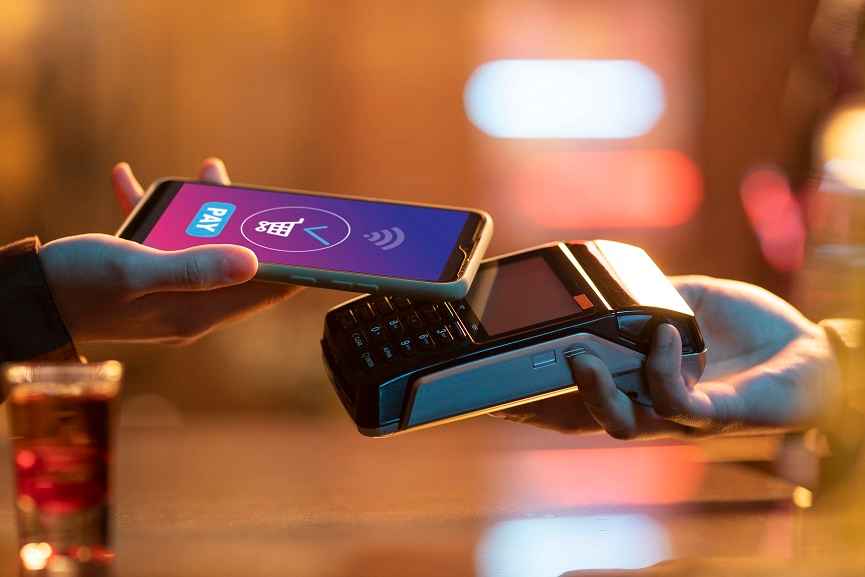
Among the most striking developments in the GCC’s mobile banking space has been the explosion of e-wallets. Companies like PayIt, backed by First Abu Dhabi Bank, have gained traction by offering an array of secure, frictionless payment solutions within a single app.
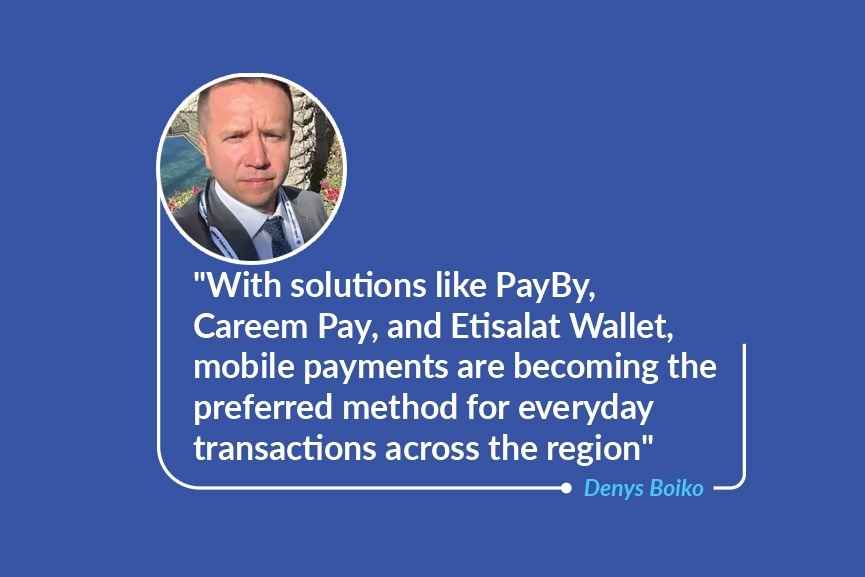
“The adoption of e-wallets in the GCC is about more than just convenience; it’s driving financial inclusion,” says Denys Boiko. “With solutions like PayBy, Careem Pay, and Etisalat Wallet, mobile payments are becoming the preferred method for everyday transactions across the region.”
Rep. Image | Source: EM’s FP User ID: 140976548
A recent WorldPay report showed that digital wallets are the fastest-growing online payment method in the Middle East and Africa. While global giants like Apple and Google Pay lead internationally, local players are growing their market share by offering tailored, user-friendly solutions.
AFAQ, for example, a digital payment system launched by the Gulf Payments Company, facilitates real-time, low-cost, cross-border transactions within the GCC. The system has quickly been integrated into the mobile apps of major regional banks including the National Bank of Kuwait.
AI and hyper-personalisation
AI is transforming mobile banking, enhancing customer experiences with “hyper-personalised” services and ever-smarter financial tools. Leading banks are adopting AI-powered chatbots, predictive analytics, and customised financial recommendations to improve user engagement and streamline banking operations.
Zand Bank, for instance, leverages AI to provide more impactful and personalised in-app support, while Emirates NBD has partnered with McKinsey to overhaul its entire operational strategy using advanced AI-driven analytics.
Rep. Image | Source: EM’s FP User ID: 140976548
The scope for swift expansion in these settings is enormous. Indeed, McKinsey has even suggested that “across the Middle East alone, AI could create as much as $150 billion in value,” or roughly 9 percent of combined annual GDP across the GCC.
Open banking and credit solutions
In the short term, ‘open banking’ is already having a major impact on the GCC financial sector. It offers consumers the opportunity to free up access to their personal financial data in return for more integrated and tailor-made solutions.
Credit applications are among the routine banking processes being radically streamlined by open finance, with these evolutions helping to fundamentally change how individuals engage with mobile banking services. The Emirates Islamic Bank, for example, now enables personal loan and credit card applications to happen at the push of a few buttons on a smartphone.
Buy Now, Pay Later (BNPL) services, meanwhile, have emerged as a powerful disruptor in the region’s financial sector. Companies like Tabby in the UAE and Tamara in Saudi Arabia have unlocked new purchasing power for millions of consumers, allowing them to split payments into smaller, interest-free instalments.
Rep. Image | Source: EM’s FP User ID: 140976548
“The enormous success and popularity of BNPL apps and services in GCC countries has been remarkable,” says Denys Boiko. “Estimates suggest the region’s BNPL market could be worth around $90 billion by decade’s end. Clearly, fintech innovators are responding to previously untapped demand for user-friendly credit and payment options among the many millions of mobile shoppers.”
Looking ahead: Denys Boiko’s perspective
The GCC’s mobile banking sector has reached a turning point, evolving from a late adopter to an industry leader in just a few years. Once held back by the dominance of traditional banking, the region is now driving financial innovation at an unprecedented pace. Regulatory support, combined with shifting consumer preferences and rapid technological advancements, has created an ecosystem where digital banking thrives.
As AI-driven personalisation, open banking, and digital payment solutions continue to reshape the landscape, the focus will shift from expansion to refinement. Banks and fintech firms must now ensure that innovation translates into tangible benefits — seamless experiences, enhanced security, and broader financial inclusion.
Looking ahead, the challenge is no longer about catching up but staying ahead. Denys Boikocaptures this sentiment: “The real measure of success in mobile banking isn’t just technology — it’s how well we use it to empower consumers and create real economic value. The GCC is no longer following global trends; it’s defining them.”