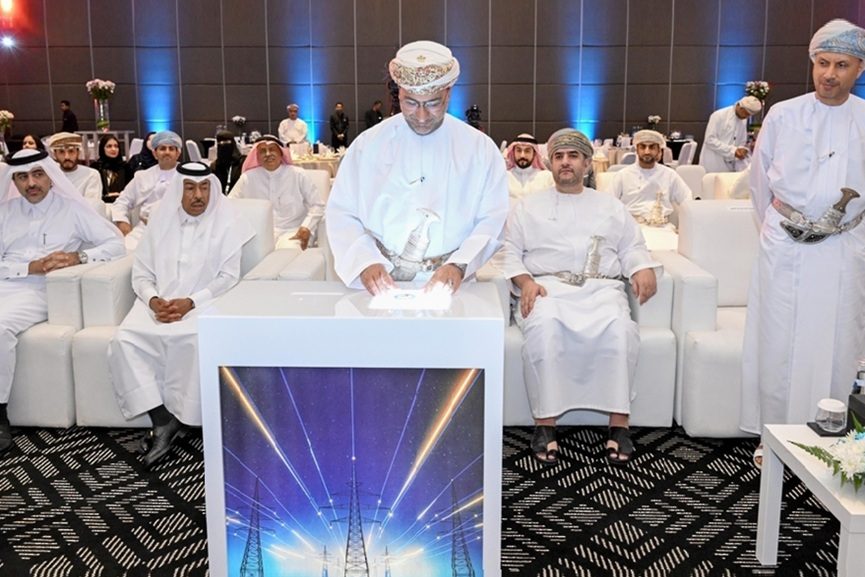
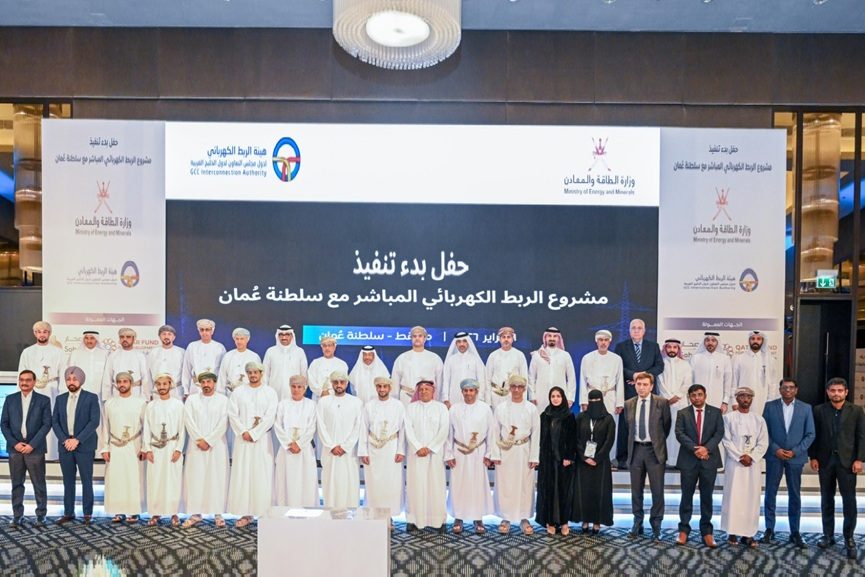
The GCC Interconnection Authority has begun implementing a direct electricity interconnection linking the Gulf Cooperation Council (GCC) grid with Oman’s network, advancing regional energy integration.
The project will feature two 400-kilovolt transmission lines spanning approximately 530 kilometres, connecting the Al Sila substation in the UAE with the Ibri substation in Oman. It also includes the construction of two 400-kilovolt substations in Ibri and Al Baynounah, fitted with advanced protection, control, and communication systems.
Additionally, a dynamic compensation station will be built to enhance grid stability and boost transmission capacity to 1,600 megawatts, improving electricity exchange efficiency between Oman and GCC states.
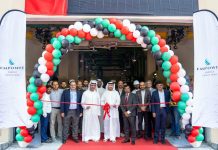
The announcement ceremony was attended by Sheikh Mubarak bin Fahad Jassim Al Thani, Ambassador of Qatar to Oman, Yaqoob Saif Al Kiyumi, Vice Chairman of the Board of Directors of the GCC Interconnection Authority, Ahmed Ali Al Ebrahim, Chief Executive Officer of the Authority, Fahad Hamad Al Sulaiti, Director-General of the Qatar Fund for Development, and Abdulwahid Mohamed Al Murshidi, CEO of Sohar International Bank, along with representatives of Gulf energy companies operating in Oman.
Mohsin Hamed Al Hadhrami, Under-Secretary of the Ministry of Energy and Minerals in the Sultanate of Oman and Chairman of the Board of Directors of the GCC Interconnection Authority, said the project reflects the vision of GCC leaders to make electrical interconnection a cornerstone of Gulf integration, emphasising that energy security underpins stability, economic growth and sustainable development.
He noted that the GCC power interconnection has delivered proven benefits for more than 25 years by enhancing grid reliability and generating significant economic savings, adding that the direct link with Oman strengthens operational flexibility and demonstrates a successful model of Gulf partnership in financing strategic infrastructure that supports the energy transition.
Image credits: ONA | Cropped by GBN
Ahmed Ali Al Ebrahim, CEO of the GCC Interconnection Authority, noted that the project is one of the largest expansion initiatives in the history of GCC Interconnection Authority, aimed at meeting rising electricity demand, supporting renewable energy integration, enhancing emergency readiness, and boosting electricity exchange capacity across GCC states.
He added that the project will deliver significant operational and economic benefits, strengthen the reliability of Gulf electricity networks during the renewable energy transition, and involves a total cost of around $700 million, with $600 million funded through agreements with the Qatar Fund for Development and Sohar International Bank.
The project led by GCC Interconnection Authority is expected to boost network reliability, strengthen emergency support, facilitate renewable energy integration, and generate significant economic savings, reinforcing the GCC power interconnection as a model for regional energy integration.