The turn of the year carries a quiet weight. Health check-ups get postponed through December and suddenly resurface in January. Gym memberships spike. Diets are rewritten.
Men promise themselves they will pay closer attention to what their bodies have been trying to say all along. Health, at this point in the calendar, stops being abstract and becomes personal. In offices, gyms, and living rooms across the UAE, those conversations have grown more candid each year.
But one part of men’s wellbeing rarely features: financial health. Most talk of health hinges upon prevention, yet true prevention must extend beyond the physical. A balanced life plan should also include the ability to weather the unexpected and to protect a family’s security when illness interrupts income.
This year’s Customer Claims Report 2025 by Zurich International Life Ltd. draws on three years of data across the UAE, Bahrain, and Qatar, and shows that heart disease and cancer remain the leading causes of claims among men. Nearly 60 percent of living-benefit claims were due to heart attacks or strokes, and one-third were cancer-related. Among death claims, one in two men had died from a cardiovascular condition, and one in four from cancer.
These statistics sketch a regional pattern. They show that while awareness has grown, preparedness has not necessarily kept pace. The data points to a common gap – families often have medical coverage but little financial cushioning for the costs that follow: rehabilitation, recovery, and the long months before work resumes.
Image courtesy of EM’s FP | Altered and designed by Team GBN
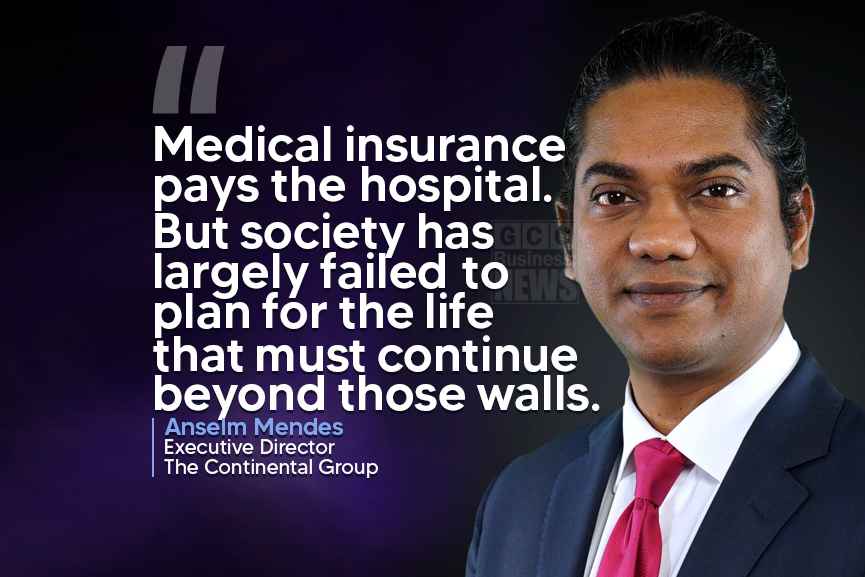
Medical insurance pays the hospital. But life continues outside those walls. Rent, school fees, and household bills do not pause while someone heals. Critical-illness protection fills that space, covering the period between getting better and getting back to work.
In the Gulf, where many single incomes support extended families, that gap can have far-reaching effects. Men are often conditioned to see themselves as dependable providers, not potential patients. It is a cultural instinct born of responsibility, but it can leave households exposed. Taking protection seriously signals maturity, and comes from recognising how easily stability can unravel.
Lessons from everyday cases
Financial advisors often describe cases that capture the tension between awareness and action. One involves a long-time professional in his sixties who, wary of rising premiums, chose to top up his existing plan rather than start anew. Months later, he suffered a heart attack. The payout from that decision kept his family financially steady through a long recovery.
Such examples show how modest choices can change outcomes. Over 20 years, the difference between premiums of a basic life policy and one that includes critical-illness protection is roughly 28.75%. For example, for a male non-smoker aged 35, this amounts to a difference of $51,543 – in practice on a monthly basis this amounts to about $102. On paper, that may look like a saving. In practice, it is a fraction of what treatment, travel, and loss of income can cost. The gap between knowing and acting remains the most expensive one to cross.
What resilience really means
Men’s health has increasingly been centred around campaigns that thrive on humour and camaraderie, but their lasting impact lies in reshaping how men define strength. The traditional version equates resilience with endurance – keep working, keep providing, keep moving. The newer, more grounded version sees resilience as preparation.
In one of the world’s fastest-moving economies, work and family life are closely intertwined, that redefinition matters. Resilience today is less about surviving hardship and more about anticipating it, and then ensuring that health shocks do not spiral into financial crises. The idea is not to live in fear of what could happen, but to build systems that allow life to continue smoothly if it does.
Representational image | Image courtesy: EM’s FP
Conversations around men’s wellbeing have already matured. Talking about mental health no longer carries the same discomfort it once did. Fitness and preventive care have entered the mainstream. But as these discussions expand, the missing link remains financial literacy. Understanding how policies work,what exclusions mean, and how far protection extends is as critical as knowing one’s blood pressure or cholesterol levels.
This broader view of wellbeing also invites collaboration between families, employers, and advisors. Workplaces that already encourage annual check-ups could take the next step by promoting financial wellness sessions. Families could make discussions about coverage part of their annual planning, the same way they schedule medical tests. Over time, such habits normalize the idea that protection is a collective effort.
Changing the lens in 2026
Health challenges can appear without warning. What matters is not only recovery but continuity. The most vital cog is that the rhythm of family life, education, and long-term goals remains intact. Building that safety net before it’s needed is as much an act of care as any medical screening.
The end-of-year reset thrives because it keeps things simple: an annual conversation, a milestone to register, and a reminder to check in backed by the society at large thinking along those terms. Extending that spirit to financial wellbeing gives the milestone a new depth. The most meaningful step men can take after the talk and the tests is to make sure their families can stay steady through uncertainty, and that’s what lasting care looks like.
About Anselm Mendes
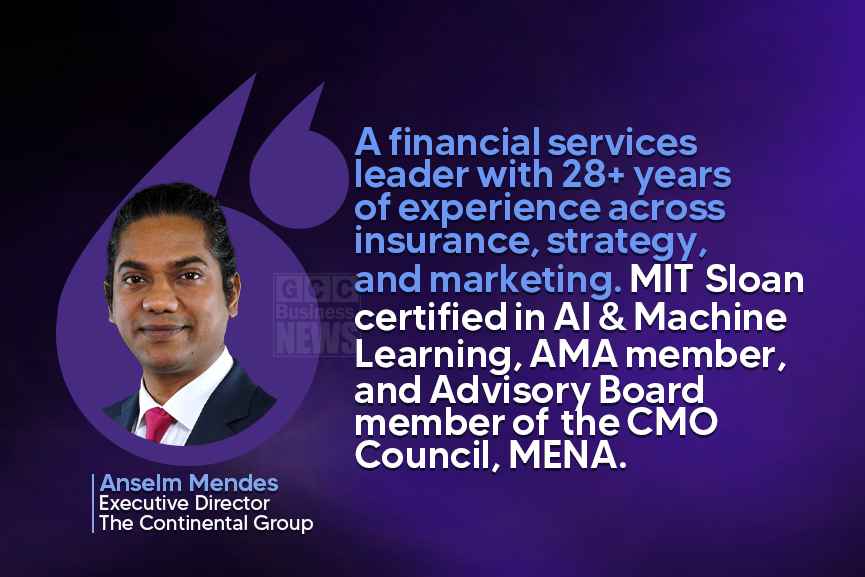
Anselm Mendes is Executive Director at the Continental Group, a leading solutions provider in insurance and financial services. In a career spanning over 28 years, Anselm has held roles in sales, marketing, corporate communications, advertising, and business development.
Following brief stints with TATA AIG Life Insurance, and Zee Network, in India, Anselm began his journey with the Continental Group as the Head of Marketing in 2007, before rising through the ranks to become the Executive Director, in 2018. His business acumen, innovative thinking, and learning agility are reflected in many positive outcomes, demonstrated by the organisation’s growth and evolution over the years.
A lifelong learner, Anselm earned a certificate from the prestigious MIT Sloan School of Management in 2018 in the area of Artificial Intelligence & Machine Learning and is a proud member of the American Marketing Association (AMA). Anselm is also a member of the Advisory Board of the CMO Council for the MENA region. In addition to hosting various webinars and seminars, he is also the host of the podcast “Dollar, Dirhams and Our Two Financial Cents.”
About Continental Group
The Continental Group is a leading insurance intermediary and financial services solutions provider in the GCC region. Licensed by the Insurance Authority, the Securities and Commodities Authority (SCA) of the UAE, and DFSA (CFS DIFC Limited from The Continental Group is regulated by the DFSA), the group represents reputed multinational and local insurance and financial institutions.
Founded in 1994, Continental is the brainchild of Ashok Sardana, who built the company on three pillars: Integrity, insight and innovation. Continental’s unparalleled industry experience, embodied by a team of over 250 highly-qualified professionals, has enabled its expansion across Europe, Middle East and Asia. Its stellar track record of fostering life-time, meaningful relationships with customers is rooted in its ability to provide tailor-made, personalized solutions.
It is a household name for all financial and insurance solutions at any stage of one’s life: Investments, savings, wealth creation, legacy, succession and protection planning, life, health, employee benefits, auto, home, and travel. The Continental Group has also been actively advocating for financial freedom & independence, financial inclusion, ESG investing, and wellbeing, through its popular podcast “Dollars, Dirhams and Our Two Financial Cents”.