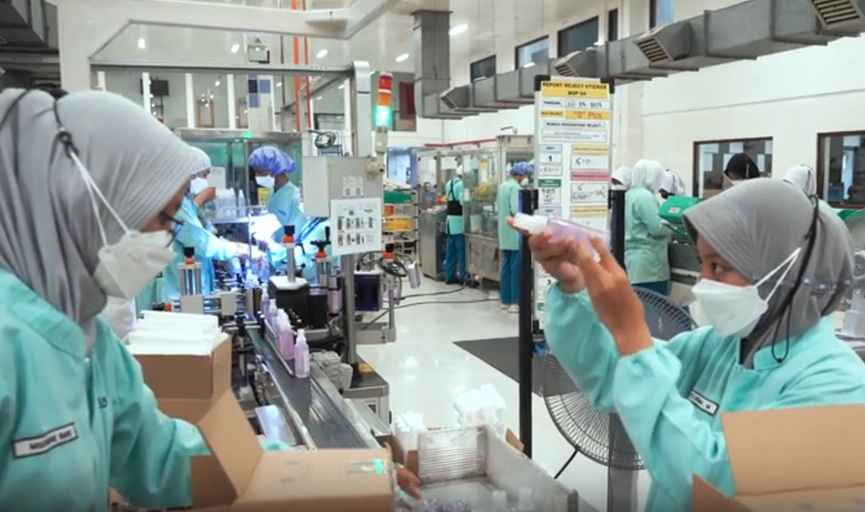
ParagonCorp, employing more than 10,000 professionals and supported by advanced research and development laboratories, stands among Indonesia’s largest beauty manufacturing companies, with a growing distribution footprint in Malaysia and shortly, around the world.
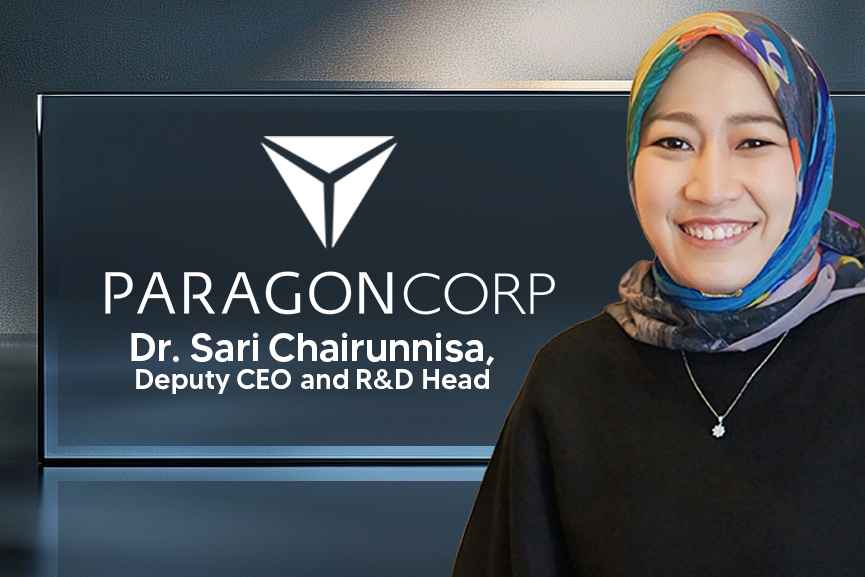
As the company expands into Gulf and Middle East communities, Deputy CEO and Head of R&D Dr. Sari Chairunnisa speaks with our correspondent about Paragon’s regional ambitions and strategic priorities.
She explains how cultural alignment, halal integrity, product adaptation, and disciplined brand building are shaping the group’s expansion strategy. The company aims to establish itself as a long-term regional partner, prioritising sustained trust, manufacturing excellence, and market relevance over short-term commercial entry.
ParagonCorp is widely recognised in Indonesia but remains relatively new to consumers across the Gulf and Middle East. How do you assess current brand perception in the region, and what gaps do you believe Paragon aims to address?
Dr. Sari Chairunnisa: Across the Gulf and Middle East, Indonesian beauty brands are still less familiar than Korean, European, or established regional players. This presents both a challenge and an opportunity. Awareness is the immediate gap, but the absence of fixed perceptions allows room to build credibility in a deliberate and disciplined way.
From our early conversations in the region, we see genuine curiosity. Consumers are increasingly attentive to where products come from, how they are made, and whether a brand’s values align with their expectations. Paragon enters the Gulf and Middle East with a strong foundation in quality manufacturing, halal integrity, and science-led product development.
Our focus is not on novelty, but on earning trust through consistent quality, relevance, and transparency.
Image source: ParagonCorp
Halal certification is a core element of Paragon’s identity. In the Gulf and Middle East, where halal is an expectation rather than a differentiator, how does Paragon approach this conversation?
Dr. Sari Chairunnisa: In the Gulf and Middle East, halal is not a marketing claim. It is a fundamental requirement. For Paragon, halal has never been an add-on; it is embedded in our research, sourcing, manufacturing, and governance processes.
Our role is not to promote halal as a feature, but to demonstrate how integrity is maintained throughout the value chain. That includes ingredient traceability, supplier accountability, and internal controls that ensure consistency over time. In this region, trust is built through demonstrated discipline, not messaging.
Beauty ideals differ across cultures. What values and aesthetics resonate most strongly with consumers in the Gulf and Middle East, and how does Paragon reflect these in its brand approach?
Dr. Sari Chairunnisa: The region places strong value on elegance, confidence, and refinement. There is an appreciation for radiant, healthy skin and what might be described as intentional glamour, expressive yet balanced.
Our response is not to reinterpret these values, but to respect them. This influences shade development, textures, durability, and visual language. We focus on enhancing natural features and delivering products that perform reliably in real-world conditions, while remaining culturally appropriate.
Climate conditions in the Gulf and Middle East can be demanding. How does this influence Paragon’s formulation and packaging decisions?
Dr. Sari Chairunnisa: Environmental conditions are a central consideration. Heat, humidity, and long wear requirements directly affect formulation choices.
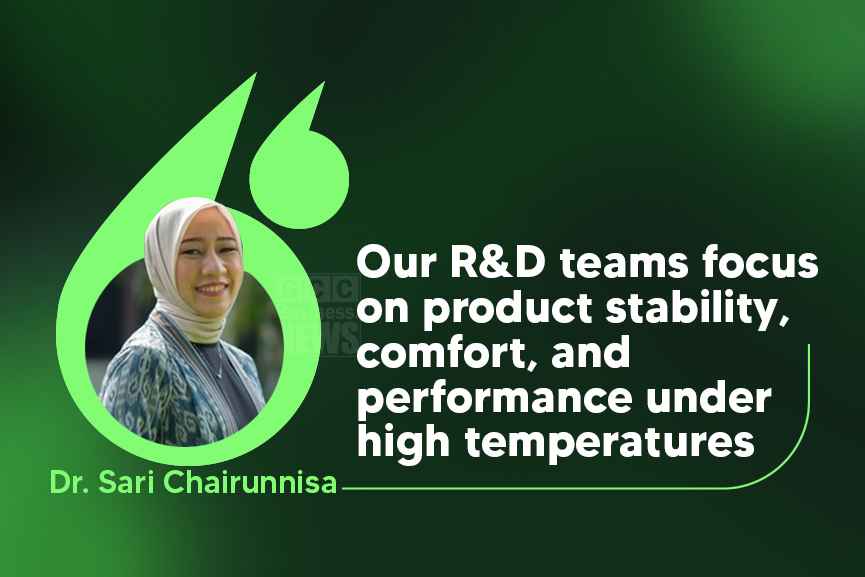
Our R&D teams focus on product stability, comfort, and performance under high temperatures. Packaging also matters. Consumers in the region expect premium, durable, and often gift-appropriate presentations. These are not secondary details; they shape overall brand experience and perception.
Image source: ParagonCorp | Reworked by GCC Business News
Digital engagement plays a major role in beauty discovery. Which platforms and community channels matter most in the Gulf and Middle East, and how does Paragon approach them?
Dr. Sari Chairunnisa: Digital platforms such as Instagram and TikTok are important across the region, but strategy matters more than presence.
We prioritise credibility over reach. Educators, professionals, and creators who understand formulation, technique, and skin science align well with our values.
Offline engagement is equally important – Regional beauty events and community-based activations allow for deeper dialogue and trust-building beyond digital impressions.
Paragon manages a diverse portfolio of brands. How do you decide which brands are suitable for the Gulf and Middle East, and how do you manage focus?
Dr. Sari Chairunnisa: Not every brand is intended for every market. Each brand has a clear role and audience. Our responsibility is to introduce brands that can genuinely meet regional expectations.
We assess formulation readiness, positioning relevance, and operational support before entering a market. A measured rollout protects brand integrity and allows us to adapt thoughtfully rather than scale prematurely.
Sustainability and ethical considerations are increasingly important globally. How does Paragon interpret these expectations in the Gulf and Middle East context?
Dr. Sari Chairunnisa: Consumers in the Gulf and Middle East are equally discerning. They value transparency and practical action over broad claims.
Our focus is responsible sourcing, efficient manufacturing, and reducing unnecessary waste where possible. We communicate clearly about what we do and where we are still improving. Credibility comes from honesty and progress, not perfection.
Wardah, a flagship brand of ParagonCorp
Trust has emerged as a recurring theme. How does Paragon institutionalise trust as it expands across new regions?
Dr. Sari Chairunnisa: Trust begins internally. Strong governance, clear accountability, and long-term thinking are essential. Expansion decisions are guided not only by growth potential, but by reputational responsibility.
We invest in people, systems, and partnerships that align with our values. This allows us to expand internationally while remaining consistent in how we operate.
Looking ahead, what does success in the Gulf and Middle East look like for ParagonCorp over the next five years?
Dr. Sari Chairunnisa: Success means being recognised as a reliable, culturally aware brand that understands regional needs. It means consumers choosing our products because they trust them, not because they are new.
We aim to build enduring relationships with partners, professionals, and communities. Growth matters, but sustainable growth matters more.
Finally, what message would you like to share with consumers and partners across the Gulf and Middle East as ParagonCorp enters the region?
Dr. Sari Chairunnisa: Paragon enters the Gulf and Middle East with respect and long-term intent. We are here to listen, learn, and build meaningful partnerships.
This region values quality, integrity, and consistency. Those values align closely with how Paragon operates. We are committed to earning trust over time, through action rather than promise.
As beauty markets across the region mature, ParagonCorp’s entry into the Gulf and Middle East reflects a broader industry shift toward trust-driven growth, culturally aware innovation, and sustainable global brand building grounded in authenticity and product integrity.