The Dubai Roads and Transport Authority (RTA) has awarded the contract for the Al Fay Street Development Project.
The project extends from its intersection with Sheikh Mohammed bin Zayed Road, passes through Sheikh Zayed bin Hamdan Al Nahyan Street, and continues to Emirates Road, with a total contract value of AED 1.5 billion ($408 million).
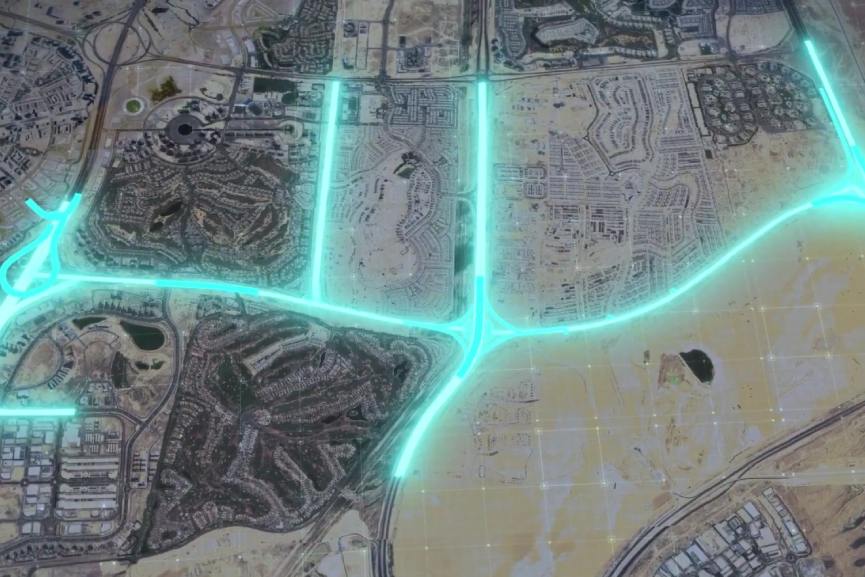
Al Fay Street is a strategic corridor and an extension of Al Khail Road, connecting Sheikh Mohammed bin Zayed Road to Emirates Road. The project entails the development of five key intersections, incorporating 13,500 meters of bridges and 12,900 meters of roads.
The project increases Al Fay Street’s capacity to accommodate 64,400 vehicles per hour. Al Fay Street serves residential and development areas, catering to a population and visitors of 600,000.
In line with the directives of His Highness Sheikh Mohammed bin Rashid Al Maktoum, Vice President and Prime Minister of the UAE, Ruler of Dubai, to enhance Dubai’s road infrastructure to meet ongoing growth and accommodate projected urban and population expansion, and under the follow-up of His Highness Sheikh Hamdan bin Mohammed bin Rashid Al Maktoum, Crown Prince of Dubai, Deputy Prime Minister, Minister of Defence, and Chairman of the Executive Council of Dubai, the Roads and Transport Authority (RTA) has awarded the contract for the Al Fay Street Development Project.
Strategic Corridor
Matar Mohammed Al Tayer Director-General, Chairman – RTA
“Al Fay Street Development Project is a pivotal infrastructure initiative within Dubai’s Road network. It establishes a new strategic corridor among the emirate’s main roads, significantly enhancing east-west connectivity. Al Fay Street acts as an extension of Al Khail Roads, stretching from its intersection with Sheikh Mohammed bin Zayed Road to Emirates Road.”
Al Tayer added that, “The project will serve a variety of residential and developmental areas, including Dubai Sports City, Jumeirah Village Circle, Dubai Production City, Jumeirah Golf Estates, Tilal Al Ghaf, DAMAC Lagoons, The Oasis, and Remraam. It will provide seamless and direct traffic flow along Al Khail Road towards Emirates Road, facilitate movement between Sheikh Mohammed bin Zayed Road and Emirates Road, and ensure smooth and safe mobility for road users. Furthermore, the project will enhance traffic capacity and efficiency at five key intersections, cementing Dubai’s status as a leader in advanced and sustainable infrastructure.”
First Intersection
Al Tayer remarked that, “Given the extensive scope of the project, which involves the construction of five intersections, it has been divided into two phases. At the First Intersection, a bridge will be constructed at the intersection of Al Khail Road and Sheikh Mohammed bin Zayed Road. This bridge will have two lanes, spanning 1,255 meters, with a capacity of 3,200 vehicles per hour to accommodate left-turn traffic from Deira along Sheikh Mohammed bin Zayed Road towards Al Fay Street and Emirates Road.
“The project also includes the expansion of service roads in both directions to increase capacity and improve traffic flow at the intersection. Additionally, two bridges with two lanes each, spanning 2,040 meters and a combined capacity of 6,400 vehicles per hour in both directions, will be built to facilitate direct traffic to and from Jumeirah Village Circle, connecting it with Sheikh Mohammed bin Zayed Road.”
Second and Third Intersections
Al Tayer explained that the second intersection will be developed at the current roundabout between Dubai Sports City and Dubai Production City. This includes constructing a bridge over Al Fay Street, spanning 960 meters with four lanes in each direction and a capacity of 14,400 vehicles per hour, ensuring smooth traffic flow along Al Fay Street.
The project works also involve converting the existing roundabout into a signal-controlled surface intersection to accommodate traffic volumes to and from Dubai Sports City and Dubai Production City. A grade-separated service road, spanning 780 meters with two lanes, will be built to facilitate traffic movement from Sheikh Mohammed bin Zayed Road towards Emirates Road, with a capacity of 3,200 vehicles per hour.
In addition, a new intersection will be constructed at Sheikh Zayed bin Hamdan Al Nahyan Street with Al Fay Street. This will feature a three-lane bridge in each direction, spanning 1,400 meters and accommodating 9,600 vehicles per hour. Another five-lane bridge on Sheikh Zayed bin Hamdan Al Nahyan Street will also be built, spanning 1,400 meters, and handling 9,000 vehicles per hour.
The project further includes two grade-separated service roads, each with three lanes in each direction, designed to facilitate left-turn movements. These service roads will span 1,400 meters, with a combined capacity of 9,600 vehicles per hour for both bridges.
Fourth and Fifth Intersections
His Excellency Mattar Al Tayer also commented that, “At the fourth intersection (Al Fay Street with Emirates Road), a two-lane bridge will be constructed to facilitate left-turn traffic from Al Fay Street onto Emirates Road towards Al Awir, Al Khawaneej, Sharjah, and the northern emirates. This bridge will span 1,000 meters and have a capacity of 3,200 vehicles per hour. Additionally, another two-lane bridge will be built to accommodate left-turn traffic from Emirates Road onto Al Fay Street heading towards Deira. This bridge will span 1,150 meters and have a capacity of 3,200 vehicles per hour.”
Al Tayer further stressed that,“At the fifth intersection, direct access will be provided from Sheikh Mohammed bin Zayed Road to Dubai Production City via the construction of two two-lane bridges, spanning a total of 2,250 meters and offering a combined capacity of 6,400 vehicles per hour. These bridges will ensure smooth and efficient traffic flow between Sheikh Mohammed bin Zayed Road and Dubai Production City in both directions.”