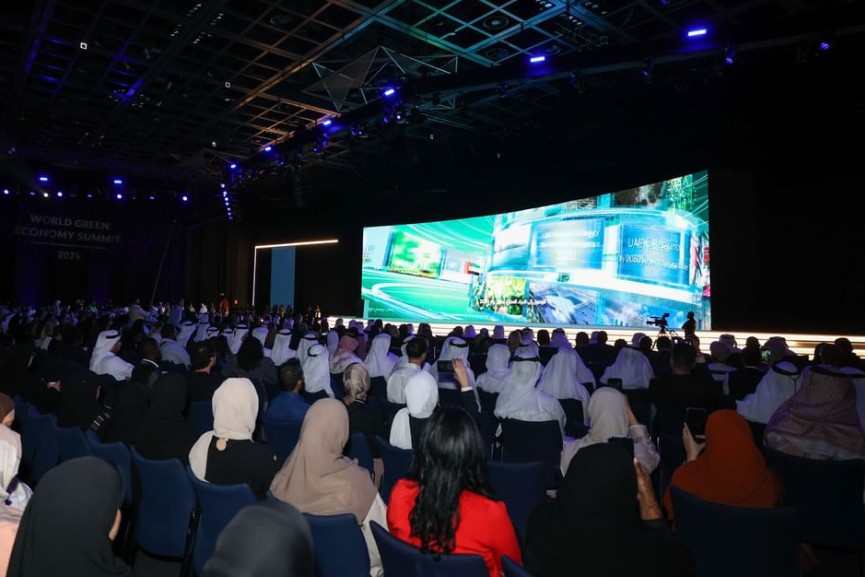
11th World Green Economy Summit (WGES) is set to kick off on 1st October at the Dubai World Trade Centre, revolving around the theme ‘Innovating for Impact: Accelerating the Future of the Green Economy’
Organized by Dubai Electricity and Water Authority (DEWA), the Dubai Supreme Council of Energy and the World Green Economy Organisation (WGEO), the event will gather experts from various industries, countries and sectors to explore innovative approaches to address climate change.
The summit will focus on empowering developing regions, fostering global co-operation, driving concrete action and enhancing public-private partnerships. WGES 2025 will cover key topics such as the energy transition, mitigation, adaptation, finance and innovation, structured around seven thematic pillars:
The sessions will dive into the role of AI technologies in driving climate resilience and sustainability. Experts will also discuss how the Internet of Things (IoT) and AI-powered solutions optimize renewable energy integration, enhance predictive analytics for environmental risk mitigation and improve carbon emissions monitoring.
Moreover, the role of energy storage innovation and public-private collaboration in advancing green technologies will be examined.
Clean and Renewable Energy Technologies:
This pillar explores cutting-edge solutions that advance sustainability goals. Discussions will examine nuclear energy role in supporting round-the-clock clean power commitments for technology giants, the viability and challenges of scaling up the green hydrogen economy, and the surging demand for critical minerals essential for renewable energy and electrification.
Focusing on ethical sourcing, investment, and tech advancements, these sessions will examine the pathways to a sustainable energy future while exploring the latest developments in energy storage technologies.
Policy and Regulation:
These sessions will analyze the dynamic shifts in climate policy and regulations, examining how competing priorities such as energy security, industrial policy and global competitiveness shape decision-making in key markets like the EU and the US.
Discussions will highlight the resilience of renewable energy investments amid regulatory uncertainty, as well as the expansion of global carbon markets and their implications for trade and industry, and the evolving role of COP in advancing international climate agreements.
With an emphasis on policy alignment, private sector engagement and governance reforms, WGES 2025 will assess the future of climate policy in driving sustainable economic growth.
Finance:
Under this pillar, the role of finance in accelerating the pace toward the green transition will be explored, while addressing key challenges in scaling up renewable energy deployment, financing climate solutions and ensuring credibility in carbon markets.
This pillar will also examine strategies for overcoming barriers to renewable energy deployment, the evolving role of voluntary carbon markets in achieving net-zero goals, and how private sector investment supports the international climate commitments.
Climate Equity:
These sessions will address how climate change effects the vulnerable communities, particularly in the areas of health, food security and water access. Growing threats from extreme heat, air pollution and resource scarcity will also be highlighted at WGES 2025, alongside exploring innovative solutions such as AI-driven smart farming, agrivoltaics and advanced water management technologies.
Climate Adaptation and Resilience:
This will explore ways to help societies adapt to climate impacts while ensuring a just and equitable transition. The complexities of loss and damage, recovery efforts through nature-based solutions, early warning systems and resilience metrics will be highlighted.
In addition, 6th pillar of WGES 2025 will dive into the role of climate justice in securing energy affordability, protecting vulnerable communities and balancing economic development with sustainability. With an emphasis on innovative adaptation approaches and international collaboration, these discussion seek to cultivate a more resilient and fair future in the face of climate challenges.
Youth in Climate Action:
The last pillar will highlight how youths can contribute to climate solutions and drive a greener future through technology, entrepreneurship and activism. The sessions will underline the surging demand for conscious and sustainable capitalism.