Though the headline, ‘Women business leadership redefining GCC’, may seem ambitious at first glance, data from the past decade, and even earlier, confirms a steady increase in women’s participation in leadership roles across the Gulf region.
While women remain underrepresented at the executive level, recent figures indicate a gradual and measurable shift. According to Fisher HR, women held 6.8% of board seats across GCC countries as of January 2025, up from 5.2% in 2024-a modest but meaningful improvement.
In the United Arab Emirates, the figure is significantly higher, with women occupying 14.8% of board positions. The country leads the region in female board representation, driven in part by regulatory reforms and strong public-sector support.
Several prominent Emirati business leaders are contributing to this progress. Figures such as Najla Al Midfa, Tayba Al Hashemi, Dr. Maryam Buti Al Suwaidi, Hana Al Rostamani, Dr. Raja Easa Al Gurg, Raja Al Mazrouei, Shamsa Al Falasi, Rola Abu Manneh, Hind bin Khirbash, and Dr. Dalya Al Muthanna are among those actively shaping boardroom decisions and national business policy.
While the trend is encouraging, representation still falls short of global benchmarks. Analysts note that, despite recent gains, these figures should be seen as part of a long-term trajectory rather than a completed milestone. Nevertheless, the data reflects the cumulative impact of policy reform, changing social attitudes, and growing institutional support for gender diversity in leadership.
Structural Challenges Persist
Rep. Image | Source: EM’s FP User ID: 140976548
Despite improved representation, women executives in the GCC continue to face structural, cultural, and institutional barriers. Historical underrepresentation has meant that women are often the sole female presence in executive rooms. A regional survey by Bain & Company revealed that 70% of female professionals identify gender stereotypes as a major obstacle to advancement. Flexible work structures and leadership mentorship remain inconsistently available.
The disconnect between education and employment also remains stark. In the UAE, women account for over 56% of STEM graduates from government universities. However, this educational lead has yet to translate into proportional leadership roles. Labor force participation rates among women vary sharply: 44% in the UAE, 36% in Qatar, and just 16% in Saudi Arabia.
Emerging Leadership and Changing Norms
Several women in the region are challenging established norms. Dr. Raja Easa Al Gurg, chair of the Dubai Businesswomen Council, is a leading advocate for women in business. Sheikha Alanoud bint Hamad Al Thani, Deputy CEO at the Qatar Financial Centre, is the first and youngest woman to serve on its executive board. Sima Ganwani Ved, founder of the Apparel Group, leads one of the largest retail conglomerates in the Gulf.
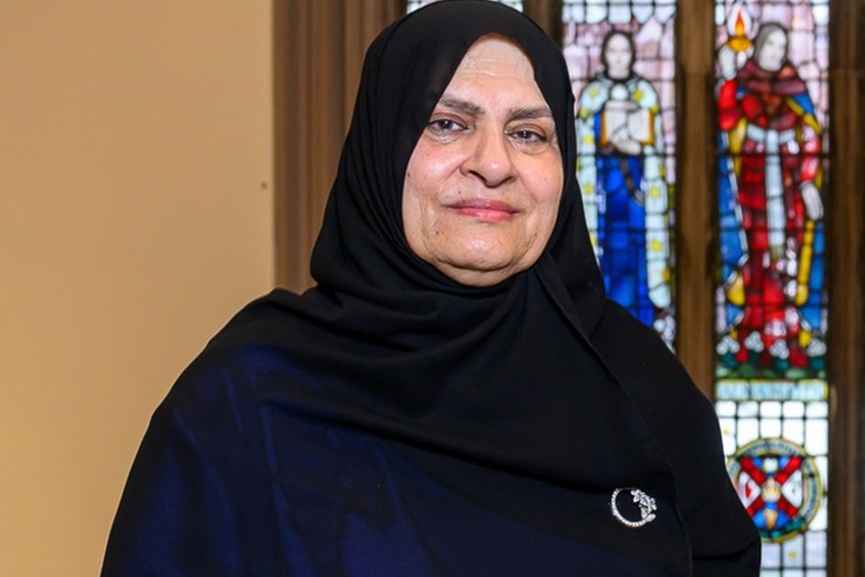
Dr Raja Al Gurg, (Image Source: Facebook/Al Gurg Group | Cropped by GBN)
Their presence highlights a slow but evident shift in both the public and private sectors, where gender diversity is becoming a strategic consideration rather than a symbolic gesture.
Corporate Action and Policy Recommendations
Industry experts argue that progress must now be translated into policy. Organisations across the GCC are being urged to adopt gender-neutral promotion policies, provide transparent pathways for advancement, and introduce meaningful mentorship programs.
Inclusion, analysts say, must go beyond individual appointments. “There needs to be a move away from one-woman boards toward inclusive decision-making at all levels,” said a regional HR advisor. Efforts to integrate more women into economic policy-making and long-term business strategy are seen as essential for sustaining this growth.
Outlook
While the proportion of women in leadership roles across the GCC remains low by global standards, the current trajectory suggests change is underway. Whether this momentum can be sustained will depend on structural reforms, cultural shifts, and the willingness of institutions to commit beyond symbolic representation.