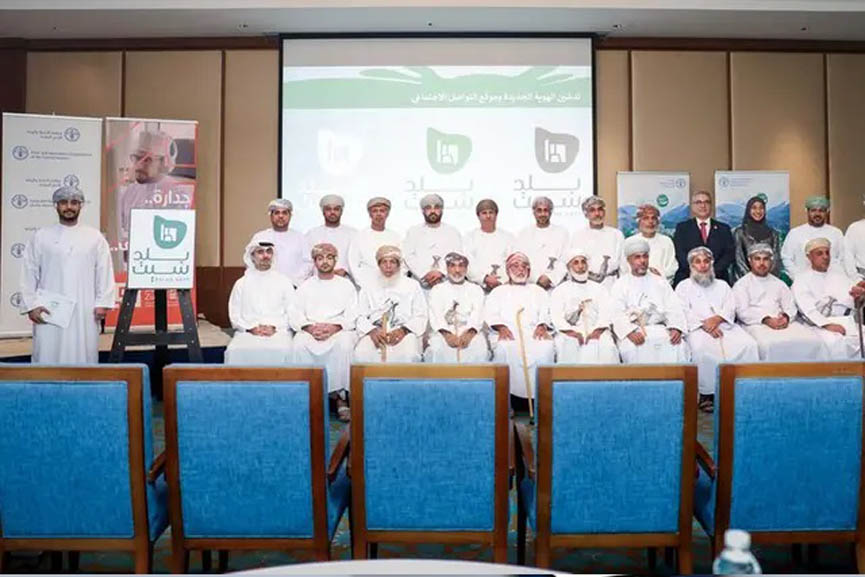
The Zubair Enterprises Development Centre (Zubair EDC), in collaboration with the Food and Agriculture Organization of the United Nations (FAO-Oman), successfully launched and reviewed the first pilot project for agricultural tourism in Balad Sayt village, Wilayat of Rustaq.
The project is designed to stimulate economic growth in rural areas by creating new employment opportunities and increasing income through tourism and agricultural activities. It also aims to mitigate rural-to-urban migration and empower rural communities, particularly women and youth.
A key focus of the initiative is the promotion of sustainable local agricultural products and value-added goods, providing local farmers with opportunities for innovation and the development of certified products. Additionally, the project enables rural communities to access new and innovative markets through an integrated model of agricultural tourism.
The ceremony commenced with a speech from the Ministry of Agriculture, Fisheries, and Water Resources, emphasizing the project’s crucial role in promoting agricultural tourism and supporting sustainable rural development. The Ministry highlighted the vital contributions of FAO and Zubair EDC in implementing impactful initiatives that drive progress in the agricultural sector and align with broader sustainability goals. This was followed by remarks from FAO representatives, reaffirming their commitment to sustainable development and ongoing support for similar projects in the future.
A detailed presentation by Zubair EDC outlined the project’s workflow, key milestones, and expected outcomes. The event also featured the official launch of the village’s new identity and branding, accompanied by a promotional video showcasing Balad Sayt’s unique heritage and tourism potential. In recognition of their contributions, participating farmers who played a pivotal role in the project’s execution were honored—an acknowledgment of their dedication to enhancing agricultural tourism and strengthening the local economy.
Ziyad bin Mohammed Al Zubair, Board Member of The Zubair Corporation, expressed his enthusiasm for the initiative, commenting, “We are proud to see Zubair EDC collaborating with FAO and the Ministry of Agriculture, Fisheries, and Water Resources on this transformative project. This initiative is part of our ongoing commitment to fostering environmental sustainability and rural development through strategic partnerships that bring together the public, private, and civil society sectors. By driving innovation in agricultural tourism and promoting sustainable agricultural practices, we contribute to building a resilient and thriving local economy. At the Zubair Corporation, we remain dedicated to supporting Oman’s Vision 2040, which emphasizes the importance of private sector engagement in achieving national development goals.”
His Excellency Dr. Thaer Yassin, Acting Representative of FAO in Oman, highlighted the significance of the project in the broader context of FAO’s mission, noting, “This event coincides with the 80th anniversary of FAO’s founding and our year-long commitment to ‘365 Days of Action.’ Our journey is one of unwavering support for agricultural communities worldwide, enhancing food security, and promoting sustainable agricultural systems. The Balad Sayt project serves as a tangible representation of our mission, but it is only the first step in a longer journey that requires continuous collaboration to ensure long-term impact and benefits for the local community.”
Ali Shaker, Head of ESG & Sustainability at The Zubair Corporation and project supervisor, stated that, “Zubair EDC remains committed to engaging in meaningful and impactful initiatives that drive positive change within the local community. This project is part of our broader efforts to support corporate sustainability and community empowerment.”
“Our collaboration with FAO and the Ministry has been instrumental in various other sustainable initiatives, such as the Coastal Women’s Project in the Fisheries Industry and the Farmers’ School Project. We hope that the Balad Sayt Village initiative will serve as a model for similar rural development projects, inspiring further support from other organizations in creating a sustainable economic and social ecosystem,” Shaker added.